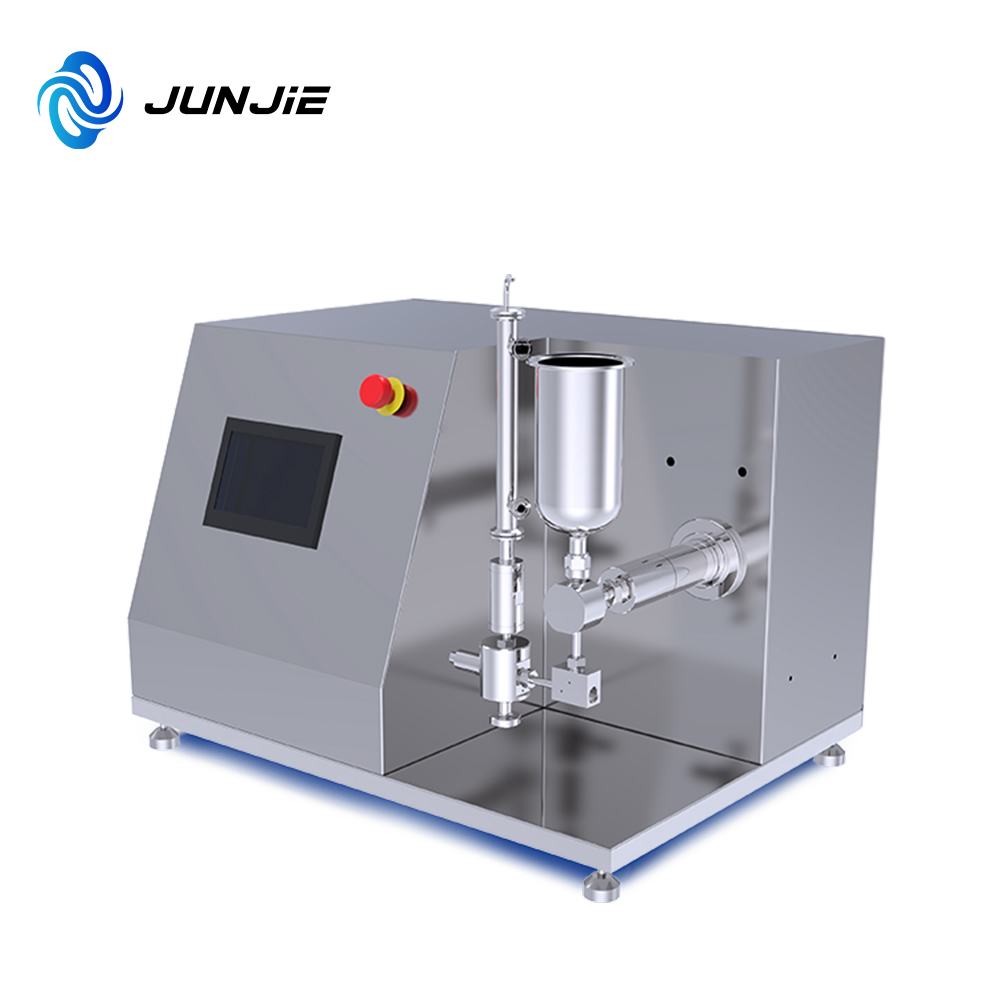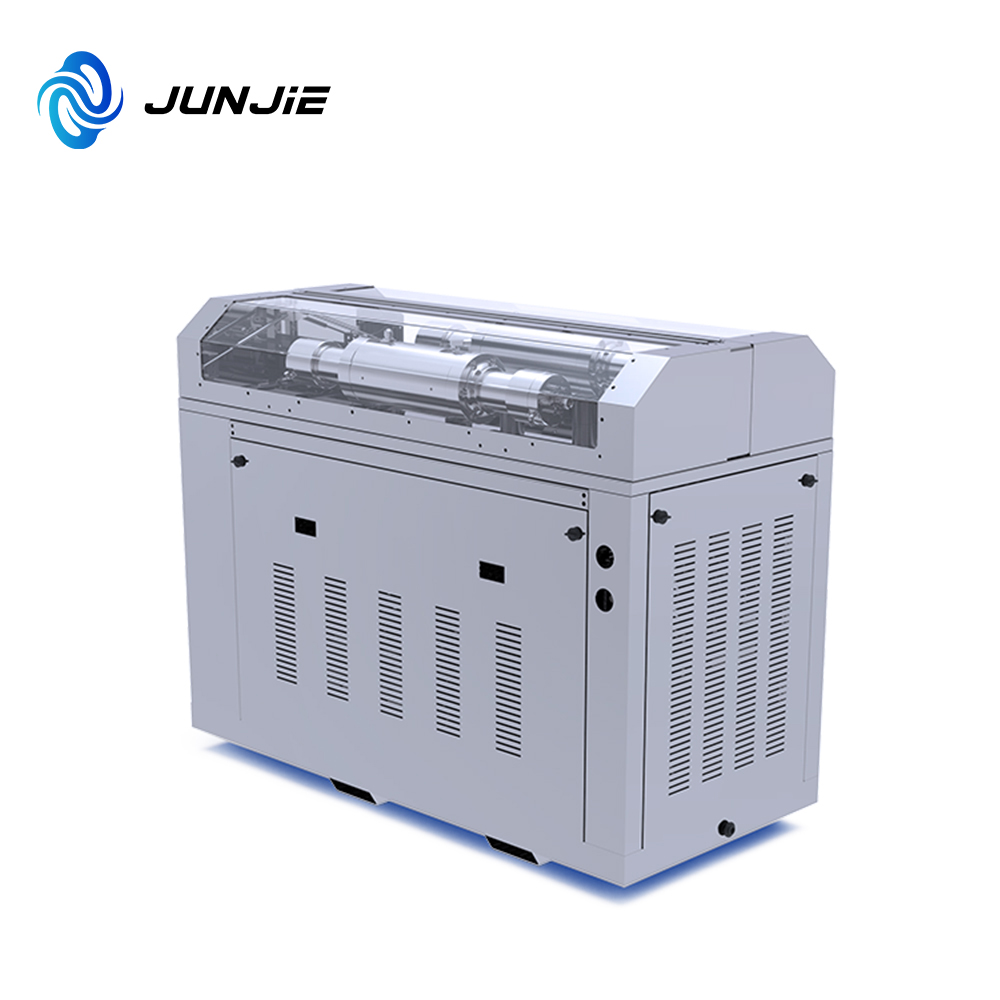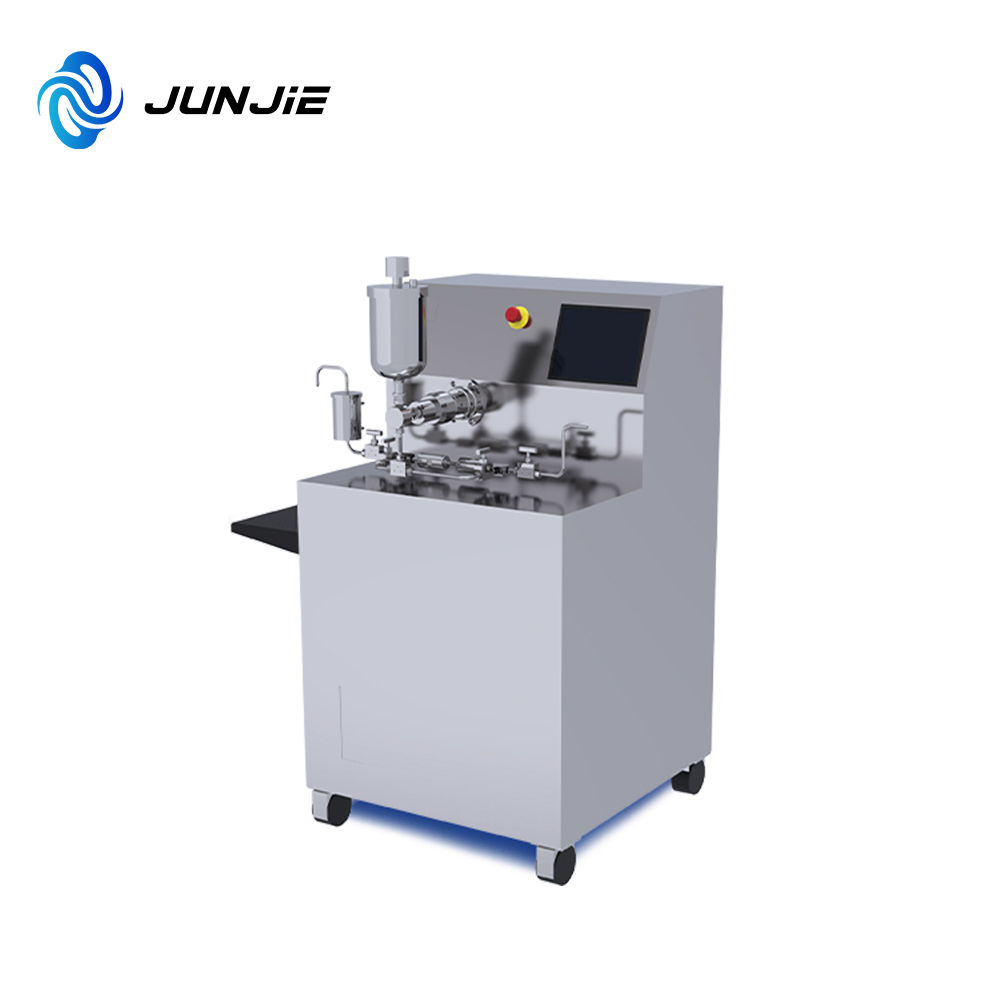
Applications: Quenched glass powder slurry, ceramic slurry, PHA suspension, 3D graphene–carbon nanotube composite slurry

Microfluidic technology provides deep nanoparticle de-agglomeration and efficient interfacial modification, key for high-performance composites like graphene and nano-ceramic slurries, ensuring batch consistency and enhancing competitiveness in advanced materials.
Applications: Quenched glass powder slurry, ceramic slurry, PHA suspension, 3D graphene–carbon nanotube composite slurry
Purely physical process with no secondary contamination; precisely controls particle size and dispersion, achieving stable nanoscale dispersions, improving production stability and product yield. Suitable for high-performance composites and electronic materials.
Flexible process parameters; significantly more efficient than traditional grinding or plasma methods. Achieves nanoscale target particle size within reasonable cycles, with >98% batch consistency in particle size and PDI—ideal for large-scale continuous production.
In-house developed core components ensure stable, reliable operation. Compared to conventional methods, total energy consumption is reduced by ~32%, lowering overall production costs.
Micro-jet technology integrates dispersion and surface modification. Ideal for hard, aggregation-prone materials such as quenched glass powders, and compatible with various inorganic powders (e.g., quartz, high-silica glass), maximizing equipment utilization.
Quenched glass powder slurry is a key functional material for high-performance composites, electronic packaging, coatings, and ceramics, used across aerospace, automotive, construction, and electronics. Particle size, dispersion uniformity, surface activity, and resin compatibility directly affect mechanical properties, appearance, reliability, and batch consistency, ultimately influencing market competitiveness.
Quenched glass powder has high hardness and low surface energy, which in traditional processing often causes agglomeration, uneven dispersion, poor surface modification, and broad particle size distribution. These issues reduce interfacial bonding, lower mechanical strength, and increase cracking in finished composites.
1. Limited effectiveness: only 40–50% of particles are uniformly coated.
2. Uneven heating causes local agglomeration and poor dispersion stability.
3. Coatings easily detach, leading to poor batch consistency and defects such as delamination and cracking.
4. Not suitable for scale-up;defect rates increase by over 22%.
5. High additive consumption and environmental pressure.
1. Suitable only for small batches and thin layers; low scalability and efficiency.
2. Strongly affected by temperature and humidity; short-lived surface activity.
3. Risk of over-treatment, reducing compatibility with resin systems.
4. Difficult to meet large orders; longer lead times and higher inventory costs.
1. Coarse processing causes over-crushing and wider particle size distribution.
2. Requires multiple cycles with high energy consumption; agglomeration often remains.
3. Insufficient surface modification weakens bonding with resin matrices.
4. Large batch variability, increasing risk of complaints and recalls.
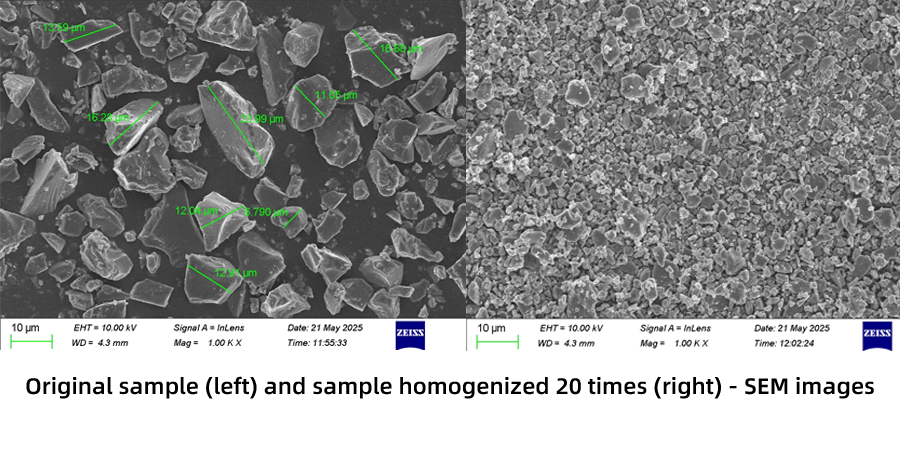
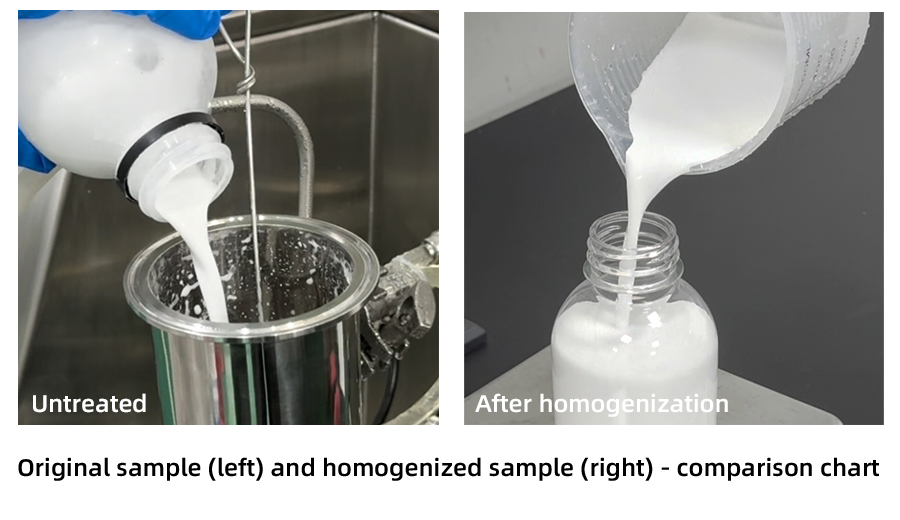
We offer customized ultra-high-pressure homogenization solutions for quenched glass powder slurries. This purely physical high-pressure process generates strong shear, impact, and cavitation forces to break agglomerates, refine particles to the nanoscale, and achieve uniform surface modification. Adjustable pressure and cycles enable one-step dispersion and modification while preserving intrinsic material properties.
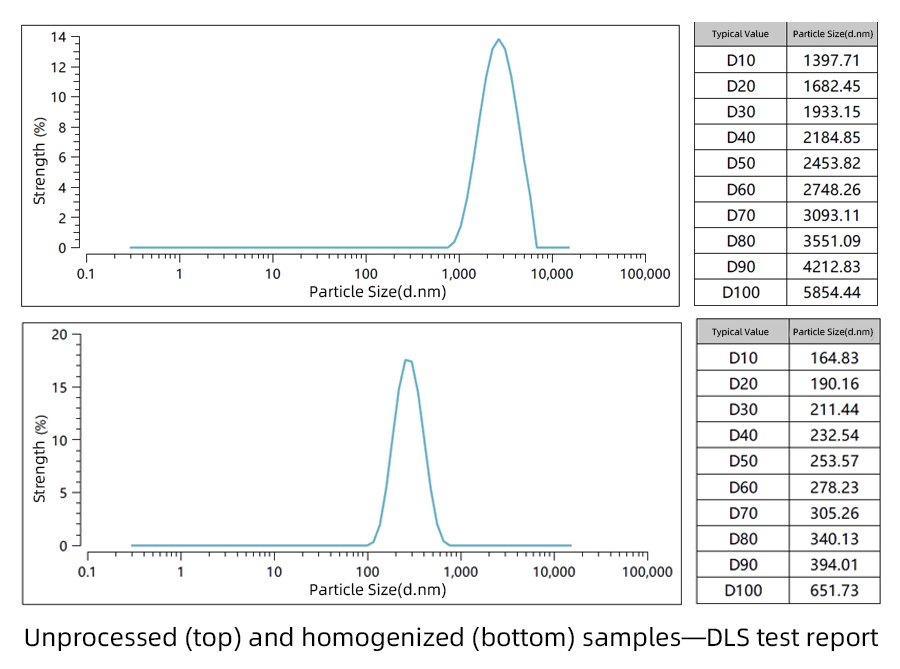
Processed at 260 MPa (1 cycle) and 300 MPa (19 cycles), with particle size, dispersion, and stability evaluated.

From process adaptation and parameter optimization to production line design, we provide one-stop customization services.