
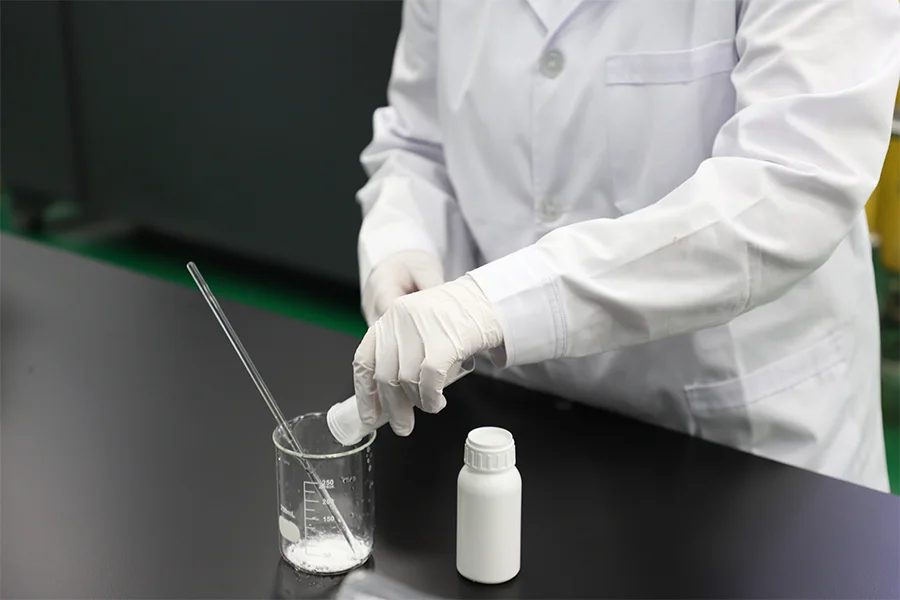
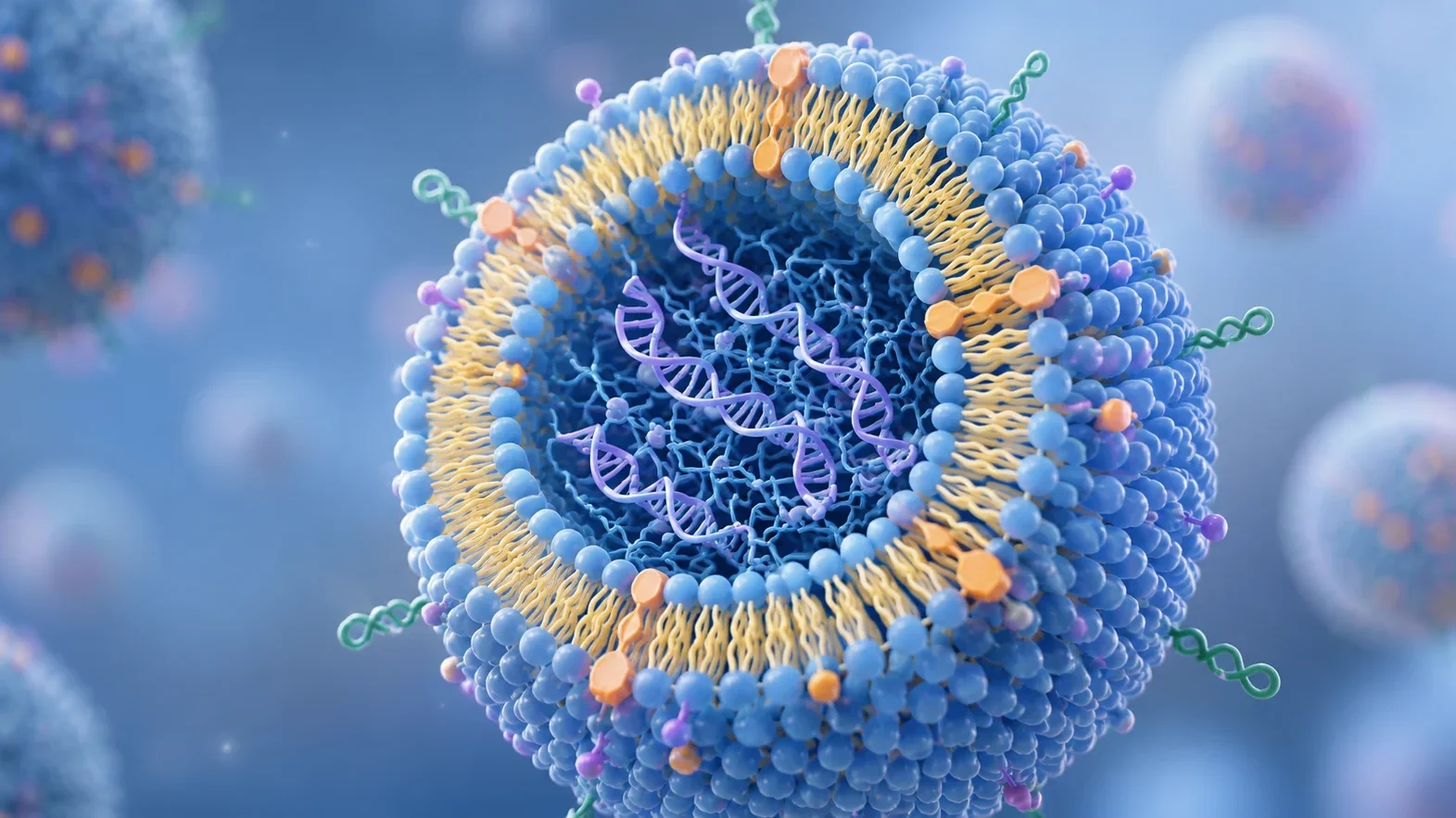
Lipid nanoparticles (LNPs) have transformed modern drug delivery by enabling the efficient transport of nucleic acids, vaccines, proteins, and other sensitive therapeutic molecules. Their success in mRNA vaccines has accelerated global interest in developing stable, scalable, and reproducible LNP manufacturing processes.
Among the many factors influencing formulation quality, lipid nanoparticle stability remains one of the most critical. Particle aggregation, size variation, premature drug leakage, and inconsistent encapsulation can significantly reduce therapeutic performance and product shelf life.
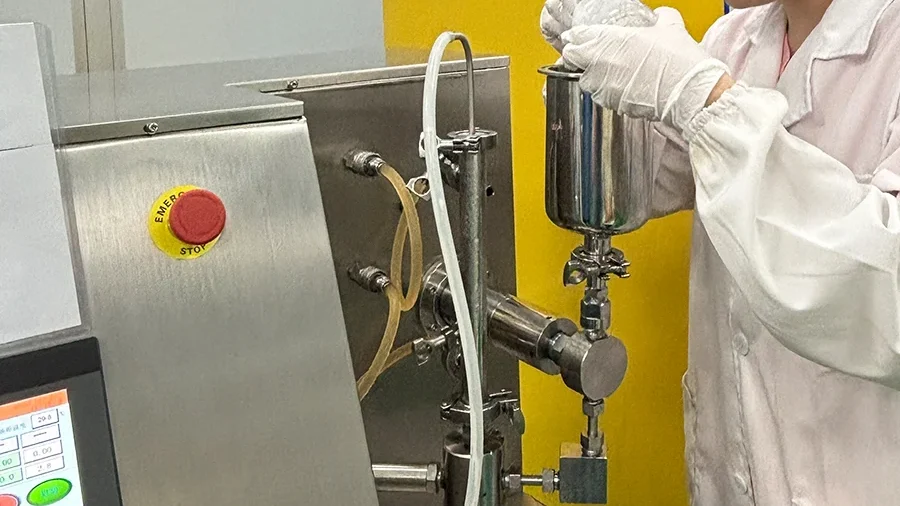
This is where microfluidic technology offers a major advantage. By generating precisely controlled fluid dynamics under ultra-high pressure, a high pressure microfluidic homogenizer produces highly uniform nanoparticles with exceptional reproducibility. As a result, pharmaceutical manufacturers and research institutions can achieve improved formulation stability while maintaining scalability from laboratory research to commercial production.
Limitations of Conventional Preparation Methods
Common methods for preparing lipid nanoparticles (LNPs), such as the thin-film hydration method, ethanol injection method, and conventional high-pressure homogenization, face several challenges in maintaining formulation stability:
Broad Particle Size Distribution (High PDI): Conventional methods struggle to produce uniformly sized particles. The resulting broad particle size distribution promotes Ostwald ripening, where smaller particles dissolve and larger particles grow, ultimately reducing formulation stability.
Poor Batch-to-Batch Reproducibility: Conventional valve-type homogenizers rely on adjustable valve gaps, making them susceptible to pressure fluctuations between batches. This limits process control and makes it difficult to ensure consistent product quality.
Risk of Metal Contamination: Dynamic seals inside traditional homogenization chambers are subject to wear, potentially introducing metal particles into the LNP formulation and compromising its purity and biocompatibility.
How Microfluidization Improves Lipid Nanoparticle Stability
Fixed-Geometry Microchannels Deliver an Ultra-Narrow Particle Size Distribution (PDI < 0.12)
Microfluidizers utilize diamond interaction chambers (Y-type or Z-type) featuring fixed-geometry micron-scale microchannels. Under ultra-high pressure (up to 420 MPa), the fluid is accelerated to supersonic velocity, creating high-energy impinging jets within the interaction chamber.
Uniform Shear and Cavitation: The fixed microchannel geometry ensures that every lipid particle experiences the same shear forces and cavitation effects, resulting in highly uniform particle size.
Significantly Lower PDI: The polydispersity index (PDI) can typically be maintained below 0.12, substantially lower than conventional methods (typically PDI > 0.20). This ultra-narrow particle size distribution effectively suppresses Ostwald ripening and greatly enhances the thermodynamic stability of the formulation.
Precise Particle Size Control Improves Encapsulation Efficiency and Structural Stability
By accurately controlling operating pressure (30,000–60,000 psi) and the number of homogenization passes, microfluidization enables precise control of LNP particle size, typically within the 50–200 nm range.
Higher Encapsulation Efficiency: Smaller, more uniform particles improve drug encapsulation efficiency while reducing payload leakage, leading to better storage stability.
Preserved Structural Integrity: High-efficiency yet controlled shear forces reduce particle size without significantly disrupting the lipid bilayer, minimizing premature release of encapsulated drugs during processing.
Low Contamination Risk Ensures Formulation Purity
The interaction chamber of a microfluidizer is manufactured from industrial diamond or ceramic materials with exceptional wear resistance. Unlike conventional homogenizers, it contains no dynamic seals, virtually eliminating the risk of metal particle contamination.
Cleaner Lipid Formulations: Eliminating metal contamination improves the chemical stability of lipid nanoparticles by preventing metal-ion-catalyzed lipid oxidation and degradation.
GMP and FDA Compliance: All wetted materials—including 316L stainless steel, tungsten carbide, and zirconia ceramic—meet sanitary standards for aseptic pharmaceutical manufacturing and comply with GMP and FDA requirements.
Precise Temperature Control Protects Thermosensitive Lipids
Phospholipids and active pharmaceutical ingredients such as mRNA are highly sensitive to temperature. Microfluidizers can be equipped with sanitary temperature-control systems that effectively regulate product temperature throughout processing.
Low-Temperature Protection: An optional recirculating cooling system maintains product temperatures at 4°C or below, minimizing lipid oxidation while protecting heat-sensitive biomolecules such as mRNA.
Consistent Thermal History: Stable temperature control ensures every batch experiences the same thermal conditions, improving batch-to-batch consistency and long-term formulation stability.
Linear Scale-Up from Laboratory Development to Commercial Production
One of the most significant advantages of microfluidization is its linear scale-up capability. Process parameters established during laboratory development—including operating pressure and the number of passes—can be directly transferred to pilot-scale and commercial production systems.
Consistent Performance Across Scales: From laboratory models (such as the HPW-10) to production systems (such as the HPW-500), the same fixed-geometry diamond interaction chamber design is used, ensuring consistent particle size distribution and PDI during scale-up.
Reduced Development Time and Cost: Manufacturers can scale up without redeveloping process parameters, significantly shortening the path from R&D to commercialization while maintaining consistent product quality and formulation stability across all production scales.
Key Process Parameters Affecting Lipid Nanoparticle Stability
Several processing variables influence final LNP quality.
Operating Pressure
Higher processing pressure generally enhances particle size reduction but should be optimized to avoid unnecessary energy input or degradation of sensitive biomolecules.
Number of Passes
Multiple passes through the interaction chamber improve particle uniformity, though excessive processing may affect delicate formulations.
Temperature Control
Temperature management prevents thermal degradation of lipids and active ingredients during ultra-high-pressure processing.
Interaction Chamber Design
The geometry of the microchannels determines flow patterns, shear intensity, and energy distribution, making chamber design a critical factor in nanoparticle quality.
Typical Applications of Microfluidizer Technology in LNP Preparation
| Application Scenario | Stability Improvement Brought by Microfluidizer Technology |
|---|---|
| mRNA vaccine LNP preparation | Precise particle size control (80–100 nm), PDI < 0.1, ensuring uniform and stable vaccine particles, improving in vivo delivery efficiency |
| Liposomal drugs | High encapsulation efficiency (>90%), narrow particle size distribution, significantly extending drug circulation time in the body |
| Nanoemulsions/nanosuspensions | Solving dispersion issues of poorly water-soluble drugs, improving dissolution rate and bioavailability, inhibiting particle aggregation |
| Nucleic acid drug delivery | Gentle processing protects nucleic acid integrity, avoiding nucleic acid breakage caused by excessive shear forces |
Why Pharmaceutical Manufacturers Choose High Pressure Microfluidic Homogenizers
Compared with conventional homogenization equipment, a high pressure microfluidic homogenizer offers several significant advantages:
| Feature | Conventional Homogenizer | High Pressure Microfluidic Homogenizer |
|---|---|---|
| Particle Size Uniformity | Moderate | Excellent |
| PDI Control | Moderate | Outstanding |
| Encapsulation Efficiency | Good | Higher |
| Batch Consistency | Moderate | Excellent |
| Scalability | Limited | Laboratory to industrial production |
| Process Reproducibility | Moderate | Excellent |
| Stability Improvement | Moderate | Significant |
These advantages make microfluidic systems the preferred choice for pharmaceutical manufacturers seeking reliable, scalable, and regulatory-compliant LNP production.
Choosing the Right Microfluidic Homogenizer
When selecting microfluidic homogenizer for lipid nanoparticle production, manufacturers should consider:
- Maximum operating pressure
- Precision-engineered interaction chamber design
- Stable pressure control
- Efficient cooling systems
- GMP-compatible construction
- Easy cleaning and maintenance
- Flexible laboratory-to-production scalability
- Comprehensive technical support and application expertise
A supplier with in-house development of core components—including pressure intensifiers and interaction chambers—can provide greater system reliability, long-term serviceability, and customized process solutions for evolving pharmaceutical applications.
Conclusion
As lipid nanoparticle-based therapeutics continue to reshape modern medicine, achieving superior lipid nanoparticle stability has become essential for ensuring product quality, efficacy, and commercial success.
Advanced microfluidic technology enables manufacturers to produce highly uniform, reproducible, and stable nanoparticles by precisely controlling particle size, encapsulation efficiency, and process consistency. A high pressure microfluidic homogenizer provides the scalability and precision needed to support applications ranging from laboratory research to large-scale pharmaceutical manufacturing.
For organizations developing next-generation drug delivery systems, investing in advanced microfluidic homogenization technology is a strategic step toward improving formulation performance, accelerating commercialization, and meeting the growing demands of modern biopharmaceutical production.