
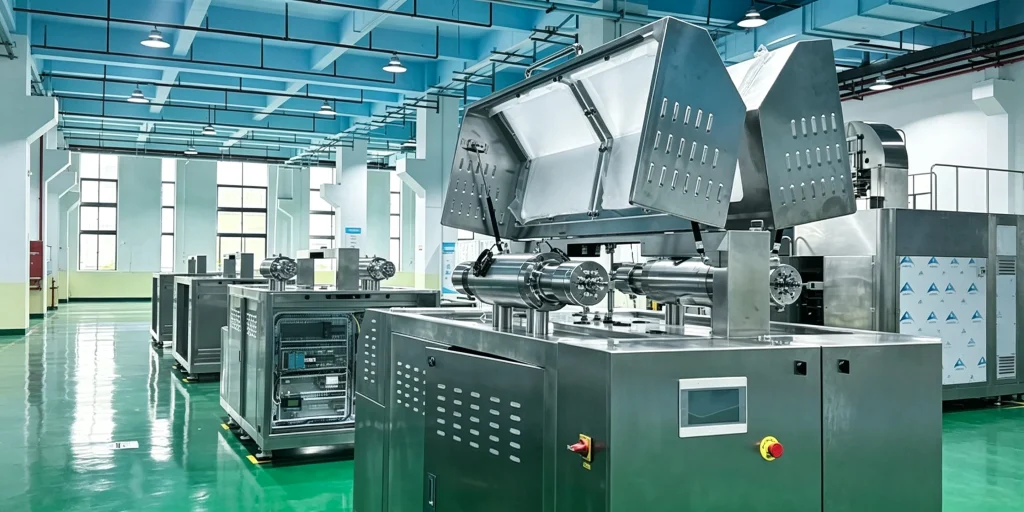
As industries continue to push the boundaries of nanotechnology, biotechnology, advanced materials, and pharmaceutical innovation, selecting the right high pressure homogenizer has become more than an equipment purchasing decision—it is a strategic investment in future competitiveness.
Whether you are developing lipid nanoparticles (LNPs), graphene dispersions, nanoemulsions, cell disruption processes, or high-performance coatings, the performance of your homogenization system directly affects product quality, production efficiency, and research outcomes.
However, one factor is often overlooked: the supplier behind the equipment.
A reliable supplier doesn’t simply sell machines. They become a long-term technology partner capable of supporting process optimization, equipment upgrades, maintenance, and future expansion.
This guide explains the most important criteria for selecting a high pressure homogenizer supplier and why companies with strong expertise in microfluidic technology consistently deliver greater long-term value.
Why Your Supplier Matters More Than the Machine
Many buyers compare only technical specifications such as:
- Maximum operating pressure
- Flow rate
- Processing capacity
- Power consumption
- Purchase price
While these specifications are important, they tell only part of the story.
A high pressure homogenizer is a sophisticated precision system where pump design, pressure stability, interaction chamber geometry, and manufacturing accuracy all influence processing performance.
Choosing an experienced supplier helps ensure:
- Stable particle size distribution
- Better batch-to-batch consistency
- Lower maintenance costs
- Longer equipment lifespan
- Faster technical support
- Easier process scale-up
In many cases, the supplier’s engineering capability determines whether your project succeeds or struggles.
1. Evaluate the Supplier’s Expertise in Microfluidic Technology
Not all homogenization technologies are created equal.
Traditional valve homogenizers primarily rely on cavitation and mechanical impact. In contrast, modern microfluidic technology forces fluids through precisely engineered microchannels at ultra-high velocity, generating intense shear, impact, and collision energy.
This approach provides:
- Smaller particle sizes
- Narrower particle size distribution
- Higher processing efficiency
- Excellent repeatability
- Superior nano-dispersion performance
If your applications involve:
- Lipid nanoparticles (LNPs)
- mRNA delivery systems
- Liposomes
- Graphene
- Carbon nanotubes
- Battery slurry
- Nanoceramics
- High-performance emulsions
a supplier specializing in microfluidics homogenizer systems is usually the better choice.
2. Verify Core Component Manufacturing Capabilities
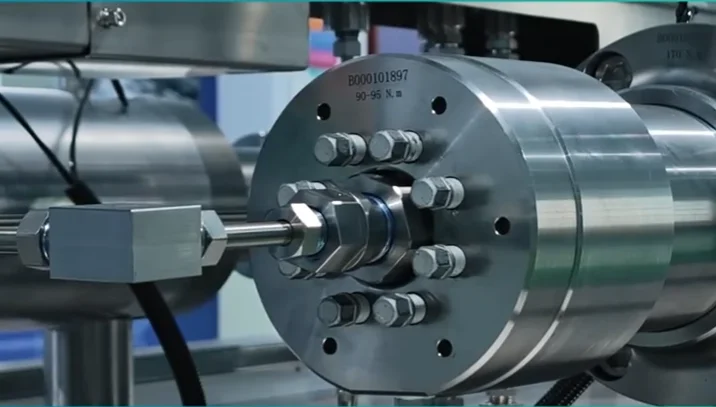
One of the strongest indicators of a supplier’s technical strength is whether they manufacture critical components in-house.
Key components include:
- Pressure intensifiers
- Homogenizing valves
- Diamond interaction chambers
- High-pressure seals
- Hydraulic systems
- Control systems
Suppliers that independently design and manufacture these components typically offer:
- Better quality control
- Faster spare parts availability
- Improved customization
- Lower lifecycle costs
- Continuous product improvement
In-house manufacturing also demonstrates deep engineering expertise rather than simple equipment assembly.
3. Look Beyond Maximum Pressure Ratings
Many suppliers advertise pressures exceeding 200 MPa or even 400 MPa.
However, maximum pressure alone does not guarantee better performance.
More important factors include:
Pressure Stability
Stable pressure ensures consistent particle size and reliable process results.
Flow Consistency
Fluctuating flow rates often lead to inconsistent emulsification and dispersion.
Repeatability
Industrial production depends on producing identical batches every time.
Processing Efficiency
A well-designed system can often achieve superior results with fewer passes, reducing production time and operating costs.
4. Assess Application Experience Across Multiple Industries
The best suppliers understand processing requirements—not just machinery.
Look for experience in industries such as:
Biotechnology
- Cell disruption
- Protein extraction
- Vaccine development
- Liposome preparation
Pharmaceutical Manufacturing
- Nano drug delivery
- Lipid nanoparticles
- Injectable emulsions
- Controlled-release formulations
New Energy
- Battery slurry dispersion
- Conductive materials
- Carbon nanotubes
- Graphene processing
Advanced Materials
- Nanoceramics
- Functional coatings
- Pigments
- Composite materials
Food & Beverage
- Nanoemulsions
- Functional beverages
- Protein dispersion
- Natural ingredient stabilization
A supplier with broad application knowledge can provide valuable process recommendations beyond equipment selection.
5. Evaluate Scale-Up Capabilities
Many organizations begin with laboratory research before transitioning to pilot production and eventually full-scale manufacturing.
An ideal supplier should offer a complete product portfolio, including:
| Production Stage | Typical Equipment |
|---|---|
| Laboratory | Bench-top high pressure homogenizer |
| Pilot | Medium-capacity system |
| Industrial | Large-scale continuous production system |
Maintaining the same microfluidic technology across all platforms simplifies process validation and reduces scale-up risks.
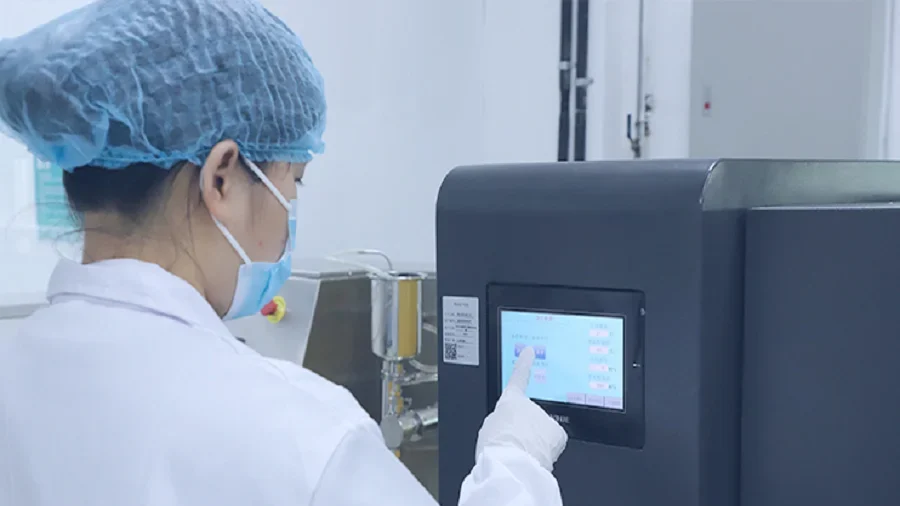
6. Examine Automation and Digital Control Features
Modern manufacturing increasingly depends on intelligent process control.
Advanced high pressure homogenizer systems should include features such as:
- PLC control
- HMI touchscreen interface
- Multi-language operation
- Data recording
- Recipe management
- Pressure monitoring
- Temperature monitoring
- Remote diagnostics
- SCADA integration
- Industrial communication protocols
These features improve operational efficiency while supporting GMP and quality management requirements.
7. Consider Equipment Reliability and Maintenance
Equipment downtime can be extremely costly.
Ask potential suppliers about:
- Mean service life
- Seal replacement intervals
- Preventive maintenance schedules
- Spare parts inventory
- Maintenance training
- Remote troubleshooting
- Global service support
Reliable suppliers are transparent about maintenance requirements and provide clear documentation.
8. Evaluate Customization Capabilities
Every production process has unique requirements.
A capable supplier should provide customized solutions for:
- Processing pressure
- Flow capacity
- Material compatibility
- Cooling systems
- CIP/SIP integration
- Explosion-proof designs
- Pharmaceutical compliance
- Cleanroom requirements
Customization ensures the equipment matches your application rather than forcing your process to adapt to standard machinery.
9. Review Certifications and Quality Management
International certifications demonstrate manufacturing consistency and regulatory compliance.
Important certifications include:
- ISO 9001
- CE
- GMP-compatible design
- Pressure vessel certifications
- Electrical safety certifications
A mature quality management system also indicates better manufacturing consistency and long-term reliability.
10. Evaluate After-Sales Technical Support
Technical support often determines long-term customer satisfaction.
Choose suppliers offering:
- Installation assistance
- Commissioning services
- Operator training
- Process optimization
- Preventive maintenance
- Spare parts supply
- Software updates
- Remote technical support
- Rapid response service
A supplier that actively supports process optimization delivers value long after installation.
Why Advanced Microfluidic Technology Creates Long-Term Value
Modern microfluidics homogenizer systems offer several advantages over conventional homogenizers:
- Higher processing efficiency
- Narrower particle size distribution
- Superior nano-scale dispersion
- Reduced energy consumption
- Better product consistency
- Lower operating costs
- Improved scalability
- Greater process flexibility
Why Choose JUNJIE as a Partner
JUNJIE holds patents for multiple core components of ultra-high-pressure equipment, and its complete units have passed ISO 9001, ISO 14001, and other system certifications. The company independently researches, develops, and manufactures its core components, and ships spare parts directly from stock to ensure a timely response. The company not only provides equipment but has also established a full-process value-added service system:
In-House R&D and Production of Core Components, Ensuring Full Control Across the Entire Supply Chain
JUNJIE’s core technological advantage lies in the fact that it independently researches, develops, and manufactures all its core components (boosters, homogenization valves, and diamond interaction chambers), possessing comprehensive manufacturing capabilities ranging from component machining to complete system integration. This provides two major direct advantages:
- Low maintenance costs and rapid response: Spare parts are kept in-house inventory and shipped immediately upon request, effectively reducing customer production line downtime.
- Parameters on par with leading international brands: The design pressure of 420 MPa is on par with leading international brands, and process parameters are directly transferable.
Ultra-High Design Pressure, Wide Application Range
JUNJIE equipment can achieve a maximum design pressure of 420MPa, higher than the industry standard of 200–207MPa.
- Sufficient pressure margin: Capable of processing hard-to-disperse materials such as barium titanate and carbon nanotubes, while reserving capacity for future process upgrades.
- Flexible and adjustable: Supports full-range stepless adjustment from 0 to 420MPa, covering various scenarios such as graphene exfoliation (low pressure), MLCC slurry dispersion (medium pressure), and liposome nano-sizing (high pressure), enabling one machine for multiple uses.
Linearly Scalable Process Parameters, Smooth Transition from R&D to Mass Production
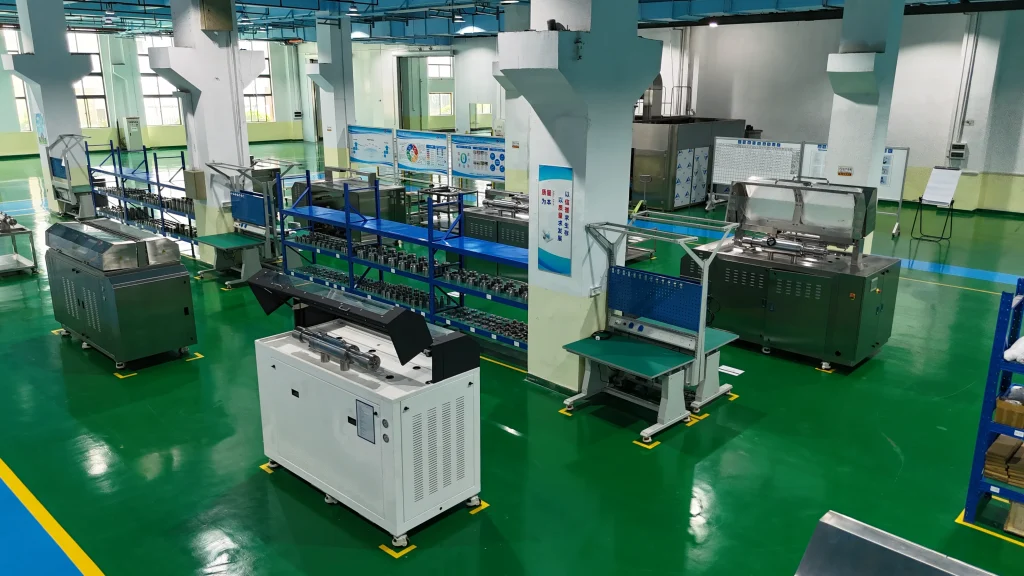
From lab-scale (HPW-10/20) to pilot-scale (HPW-250) and production-scale (HPW-500), all models share a unified design pressure of 420MPa, supporting linear scale-up of process parameters. This means parameters validated in the lab can be directly transferred to pilot and production equipment without re-optimization, effectively reducing trial-and-error cycles.
Two Core Processing Unit Options, Flexible Adaptation to Different Needs
JUNJIE offers two configuration options — diamond interaction chamber and homogenization valve — tailored to different purity requirements and budgets:
- Diamond Interaction Chamber: Made entirely of diamond material, offering exceptional wear and corrosion resistance with virtually no wear debris, eliminating metal contamination — ideal for semiconductor, pharmaceutical, and other high-purity applications.
- Homogenization Valve: Features a replaceable valve seat and valve stem with adjustable gap, offering low maintenance costs — suitable for food, chemical, and other conventional purity applications or high-viscosity materials.
Full Lifecycle Service System and Materials Laboratory Support
JUNJIE operates a microfluidics nano-homogenization materials laboratory, providing full lifecycle services from sample testing and process validation to scale-up data support. Customers can send materials, and application engineers will match process parameters and issue reports, using actual test data to support equipment selection decisions — effectively reducing customers’ upfront trial-and-error risk.
Conclusion
Selecting a high pressure homogenizer supplier is a strategic decision that affects research productivity, manufacturing efficiency, and long-term business growth.
Rather than focusing solely on price or maximum pressure ratings, evaluate the supplier’s engineering expertise, manufacturing capabilities, application knowledge, service network, and commitment to innovation.
A supplier with proven experience in microfluidic technology, in-house production of critical components, and comprehensive lifecycle support can help your organization achieve consistent product quality, efficient scale-up, and sustainable operational success.
Ultimately, the right supplier is not simply a machine manufacturer—they are a long-term technology partner that grows alongside your business.